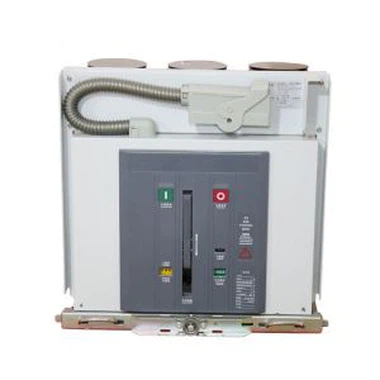
What is a complete set of low-voltage electrical equipment?
Nov 28, 2020
Low-voltage electrical complete equipment refers to complete equipment with a voltage level of 380V and below. Consider the latter from a safety perspective, but the two are not contradictory, because in the power distribution system, low-voltage electrical appliances refer to the 380V power distribution system. Therefore, in actual work, low-voltage electrical equipment needs to use electrical equipment with a voltage level of 380V and below.
Low-voltage electrical equipment is widely used in power distribution, electric drive and automatic control equipment for low-voltage systems. As we all know, power generation itself consumes a lot of energy (referring to factory electricity). According to statistics, the energy consumption of low-voltage electrical equipment accounts for more than half of the total energy consumption of power plants. In recent years, with the adoption of large-scale low-voltage electrical complete sets of equipment and the emergence of automatic control and automatic adjustment systems, the use of low-voltage electrical appliances has greatly increased. Therefore, in the maintenance of power plant equipment, the maintenance of low-voltage electrical equipment is an important link, regardless of the importance of the equipment or the workload, it is an important part of the maintenance work.
In order to ensure normal power supply, the meters and electrical appliances on the switchboard in the low-voltage electrical complete sets of equipment should be checked and maintained frequently, and records should be kept to analyze the operation and power consumption at any time, find problems in time and eliminate hidden dangers.
For low-voltage electrical complete sets of equipment in operation, the following should usually be checked:
1. Whether the names, signs and numbers of the electrical components on the power distribution panel and the screen are correct, and whether the positions of all operating handles and buttons are consistent with the actual situation on the site, whether the fixing is firm, and whether the operation is flexible.
2. The power distribution panel of the low-voltage electrical complete set of equipment indicates whether the signal lights (such as "on" and "off") and other signal instructions are correct.
3. Check whether the contacts of isolating switch, circuit breaker, fuse and transformer are reliable, whether they are overheated or discolored.
4. Whether the insulation of the secondary circuit wire is damaged or aging.