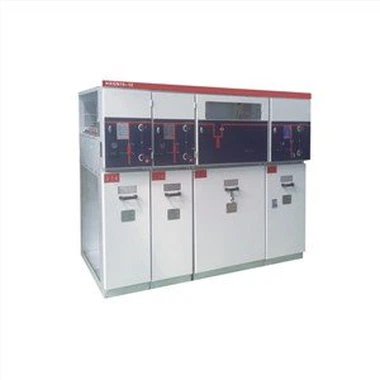
The role of grounding knife in high voltage switchgear
Sep 16, 2021
The high-voltage switchgear grounding knife is to protect personal safety. When you close the ground knife and start overhauling, when a sudden call comes in, direct the electricity directly into the ground to force it to short-circuit and cause a trip, which can reduce the possibility of electric shock. The resistance of the human body is greater than the ground resistance, which is to use the principle of less current divided by a large resistance, thereby greatly reducing the current from the human body to the ground.
The grounding knife of the high-voltage switchgear can withstand a large breaking current and has a certain arc extinguishing capacity. When the fast grounding is in the cast, the line is erroneously transmitted, and it can be reliably grounded, which can make the line protection operate reliably and cut off the fault current. The high-voltage switchgear must prevent misoperation and discharge the line. If someone closes the switch, the trolley cannot be shaken in. Even if it is shaken in, it will directly short-circuit to the ground as soon as the switch is closed. Ensure the safety of the repair line, so when repairing, it must be listed, and the ground knife is also necessary, otherwise you are not responsible for your own life.
Detailed explanation of the function of the grounding knife of the high-voltage switchgear:
1. In terms of tripping, it is actually very simple. When a single-phase fault occurs in the line, the switches on both sides of the fault line are disconnected. However, due to the electromagnetic coupling between the normal phase and the fault phase, there is a submerged current, which is not conducive to arc extinguishing. In order to reduce the submerged current, when the switches on both sides are disconnected, the automatic device action immediately closes the HSGS on both sides to achieve the effect of rapid arc extinguishing.
2. The biggest use of HSGS is actually to cooperate with the switch to realize reclosing. The steps are as follows:
(1) A single-phase grounding short-circuit fault occurs, resulting in an arc
(2) The switches at both ends of the fault phase are tripped, the primary arc is extinguished, and the submerged arc (secondary arc) is generated
(3) The HSGS installed in the fault phase is grounded and the submerged arc is extinguished
(4) HSGS is disconnected
(5) Reclosing action switch recloses