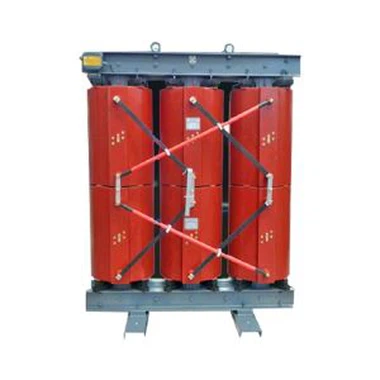
Precautions when installing the transformer
Feb 21, 2021
1. Operating conditions
The construction drawings and technical data are complete and correct. The construction project has been basically completed, and the elevation, size, structure and strength of the embedded parts meet the design requirements. The roofing and roof spraying are completed, the roof has no water leakage, and the doors, windows and glass are installed well. The indoor rough ground project is completed, the site is cleaned, and the road is unblocked.
2. Operation process
2.1 Stable installation of transformer
When the transformer is in place, it can be thrown directly into the transformer room with a car crane, or a temporary track can be erected with road wood, and then hoisted to the temporary track with a three-step sling and chain, and then pulled into a suitable place indoors with the chain. When the transformer is in place, it should be noted that its orientation and distance from the wall are consistent with the drawings, and the allowable error is ±25mm. If the drawings are not marked, they should be placed on the track longitudinally, and the distance from the wall to the wall should not be less than 800mm, and the distance to the door should not be less than 1000mm. The installation of the transformer stand: the transformer is installed on the two poles, the root of the two poles is 2m. The distribution transformer platform is fixed on two electric poles with two or four channel steel, the height of the platform from the ground is not less than 25m, and the plane slope of the platform is not more than 1/100. The waist fence should be wound with iron wire with a diameter of not less than 4mm for more than two times, the winding should be tight, and the waist fence should be no less than 0.2m from the live part. At the same time, the transformer high voltage column head is equipped with a dust cover, and a warning sign is hung on the transformer.
2.2 Installation of drop-out fuse
Fuses should be installed on the high and low voltage sides of the transformer. The vertical height of the bottom of the high-voltage side fuse to the ground should not be less than 4.5m, and the horizontal distance of the fuse of each phase should not be less than 0.5m. In order to facilitate the operation and the fuse tube can fall down smoothly after the fuse is blown, the drop fuse The axis of the device should form an inclination angle of 15° to 30° with the vertical. The vertical distance between the bottom of the low-voltage side fuse and the ground shall not be less than 3.5m, and the horizontal distance of each phase fuse shall not be less than 0.2m. The fuse of the drop-out fuse is selected according to the principle of "guaranteeing that the distribution transformer or the high and low voltage outlet bushings are short-circuited quickly". The fusing time of the fuse must be less than or equal to 0.1s. According to the regulations: For those with a capacity of 100kVA and below, the rated current of the high-voltage side fuse should be selected as 2 to 3 times the rated current of the transformer; for those with a capacity above 100kVA, the rated current of the high-voltage side fuse should be 1.5-2 of the rated current of the transformer. Times to choose. The fuse of the low-voltage side of the transformer is selected according to the rated current of the low-voltage side.
2.3 Installation of lightning arrester
Operation experience has proved that most of the external dangers affecting the operation of distribution transformers come from lightning accidents. Therefore, the transformer should be equipped with lightning protection devices. Our bureau chooses a gapless synthetic insulating jacket metal oxide arrester to replace the original valve-type porcelain jacket arrester, which has strong power frequency voltage tolerance, good sealing performance and stable protection characteristics. The arrester should be installed between the fuse and the transformer, and as close as possible to the transformer. This not only protects the transformer, but also facilitates maintenance. In addition, in order to prevent inverse conversion waves and lightning waves on the low-voltage side, a low-voltage arrester should also be installed on the low-voltage side. In order to avoid the superimposition of the voltage drop of the lightning current on the grounding resistance and the residual voltage of the arrester, which acts on the insulation of the transformer, the ground terminal of the arrester, the housing of the transformer and the neutral point of the low-voltage side should be multi-stranded with a cross-section of not less than 25mm2. The copper core plastic wires are connected together, and then connected with the lead wire of the grounding device.
2.4 Grounding device
In the current rural power grid transformation, there are many small-capacity transformers in rural areas. 10kV distribution transformers are often struck by lightning during thunderstorms. Because the grounding resistance is too large and cannot reach the specified value, the lightning current cannot quickly leak into the earth, causing the residual voltage of the arrester itself. Large, or produce a very high voltage drop on the grounding resistance, causing the transformer to burn out. Therefore, the grounding resistance of the grounding device must comply with the value specified in the regulations. For 10kV distribution transformers: if the capacity is below 100kVA, the grounding resistance should not be greater than 10Ω; if the capacity is above 100kVA, the grounding resistance should not be greater than 4Ω. After the grounding device is constructed, the grounding resistance test should be carried out, and the soil can be backfilled only after being qualified. At the same time, the transformer housing must be well grounded, and the housing grounding should be tightened with bolts. It cannot be welded directly to facilitate maintenance. The underground part of the grounding device is composed of a horizontal grounding body and a vertical grounding body. The horizontal grounding body adopts a 40×4mm flat steel with a length of 6m, and the vertical grounding body adopts 3 L50×50×5mm angle steels with a length of 2m. Weld with the horizontal grounding body respectively. The horizontal grounding body is buried in the soil to a depth of 0.6-0.8m, and the vertical grounding body is driven into the ground on the basis of the horizontal grounding body. 40×4mm flat steel is used for the grounding lead wire. For a pole-mounted transformer, the lead wire connection point should be located at the channel steel position under the transformer.
2.5 Variable platform drop line
The drop wires of the newly built and modified transformers should be multi-strand insulated wires, and the cross-section should be selected according to the rated capacity of the transformer, but the copper core of the drop wires on the high-voltage side should not be less than 16mm2, and the aluminum core should not be less than 25mm2. Avoid using single strands. Wires and unqualified wires. At the same time, the distance between the lead wire and the surrounding buildings should be considered.
3. Equipment and material preparation
The transformer should be equipped with a nameplate. The nameplate should indicate the manufacturer’s name, rated capacity, primary and secondary rated capacity, primary and secondary rated voltage, current, impedance, voltage and wiring group and other technical data. The capacity, specification and model of the transformer must meet the design requirements. The accessories and spare parts are complete, and there are factory certificates and technical documents. Section steel: Various specifications of section steel should meet the design requirements without obvious corrosion. Bolts: Except for anchor bolts and anti-vibration device bolts, all galvanized bolts should be used with corresponding flat washers and spring washers. Other materials: welding rods, anti-rust paint, blending paint, etc. should meet the design requirements and have product qualification certificates.
4. Transformer handover test
The contents of the transformer handover test: measure the DC resistance of the coil and the bushing; check the transformation ratio of all tapped transformers; check the wiring group of the three-phase transformer and the polarity of the individual transformer lead wires; measure the coil and the bushing together The insulation resistance of the coil; the AC withstand voltage test of the coil and the bushing.
5. Check before the transformer is powered on
The transformer should be checked before power transmission and trial operation, and it can be put into operation only when it is confirmed that it meets the conditions for trial operation. Before the test operation of the transformer, it must be inspected by the quality supervision department. The inspection content before the test operation of the transformer; ①The various handover test documents are complete and the data meets the requirements. ②The transformer should be cleaned and wiped clean, there is no debris on the top cover, and the body and accessories are not defective. ③The transformer primary and secondary leads have the correct phase and good insulation. ④The grounding wire is good. ⑤The ventilation facilities are installed and working normally. ⑥Hang the sign and lock the door.
6. Acceptance of transformer power transmission trial operation
Power transmission trial operation: When the transformer is switched on for one time, it can be switched on by full-voltage shock, and when switched on by shock, it can generally be switched on by the high voltage side. After the transformer is energized once, the duration should not be less than 10 minutes without abnormal conditions. The transformer should be closed for 3~5 times of full-voltage impulse, and there is no abnormal situation, and the inrush current should not cause the protection device to malfunction. Attention should be paid to the impact current, no-load current, primary and secondary voltage and temperature of the transformer during trial operation. And make detailed records. The transformer has no-load operation for 24 hours without abnormal conditions before it can be put into load operation. Acceptance: ①The transformer is energized and there is no abnormal situation after 24 hours, and the acceptance procedures should be handled. ② The following materials and documents should be handed over during acceptance: the proof of design change. Technical documents such as product specification, test report, certificate of conformity and installation drawings. Installation inspection and adjustment records.