Precautions for grounding protection of high and low voltage switchgear
Dec 23, 2020
The grounding protection of high and low voltage switchgear is to connect some conductive parts of electrical installations or facilities in the power system and buildings to the grounding electrode through the grounding wire. Electrical equipment metal shells, power distribution equipment frames and line towers may become charged after insulation damages. Grounding measures are taken to prevent personal and equipment safety.
However, the following information should be paid attention to in the grounding protection of high and low voltage switchgear:
1. In order to ensure the safety of maintenance work, the main circuit should be grounded. During maintenance after the casing is opened, the main circuit should be connected to the ground electrode.
2. There should be a grounding copper bar with a cross-section of not less than 50×5 on the cabinet body, and a copper bar connecting board between each cabinet.
3. The shell should be grounded. All metal parts that do not belong to the main circuit or the auxiliary circuit and need to be grounded should be grounded. The enclosure, frame, etc. should be able to ensure a tight connection to ensure electrical communication.
4. The ground loop should be able to withstand dynamic and thermal stability tests. The contact surface of the grounding point and the cross-section of the ground connection should be able to safely pass the fault ground current. The diameter of the bolt that is fastened and grounded shall not be less than 12mm, and the grounding point shall be marked with a grounding symbol.
5. Isolating switches and grounding switches should have instructions to show their opening and closing positions and to facilitate inspections. Isolating switches and grounding switches should not cause misdivision or misconnection due to forces that may occur during operation.
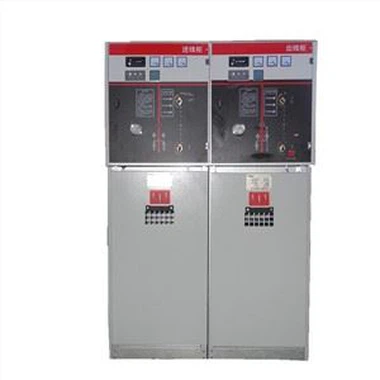
6. The high and low voltage switchgear should be divided into several compartments. The division of the compartments should not only meet the normal operating conditions, but also limit the arc effect inside the compartment. All functional units such as: busbar room, circuit breaker room, cable room, and relay instrument room are required to be galvanized.