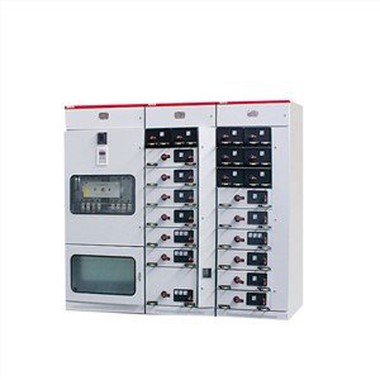
Key points for purchasing high-voltage switchgear
Sep 09, 2021
The debugging of low-voltage power distribution cabinet is mainly divided into two parts: mechanical test and electrical debugging.
1. Mechanical debugging: The mechanical debugging is mainly the debugging of hand-operated parts and drawers.
The main purpose of mechanical debugging is to check whether the operation of each organization is flexible and the quality is reliable. When inspecting the drawer, pay special attention to whether the positioning of the connection and disconnection positions is reliable, because this operation directly affects whether the low-voltage power distribution cabinet can be used normally.
2. Electrical debugging: electrical operation experiment, interlocking function test and insulation test.
(1) Electrical operation test: Under the premise of correct installation and wiring, conduct a simulated action test in accordance with the electrical schematic diagram, that is, a power-on test.
mainly includes:
1) Whether the closing and opening of the circuit breaker is normal;
2) Whether the button operation and related indicators are normal;
3) Whether manual switching is normal. This kind of test should be carried out one by one, first debugging the cabinets, and then debugging the drawers one by one.
(2) Interlock function test: Check the interlock between the operating mechanism and the door, and the interlock between the drawer and the door. In the case of closing (power on), the door cannot be opened. The door can only be opened after the gate is opened. The mechanical or electrical interlock between dual power supplies cannot be closed when the normal power supply is normally powered by the backup power circuit breaker. When the main power supply is cut off, the backup power supply will automatically complete the mutual switching.
(3) Insulation resistance test: In order to ensure the components of the operator, the cabinet, and the components in the cabinet, the insulation resistance test is indispensable.
The main measuring parts are:
1) When the main switch of the switch cabinet is in the off position, between the incoming and outgoing wires;
2) Between different live parts when the main switch is closed;
3) The part between the main circuit and the control circuit;
4) Between each live component and the metal frame of the cabinet. The test time needs to reach 1 minute, and the test resistance needs to reach 0.5MΩ.