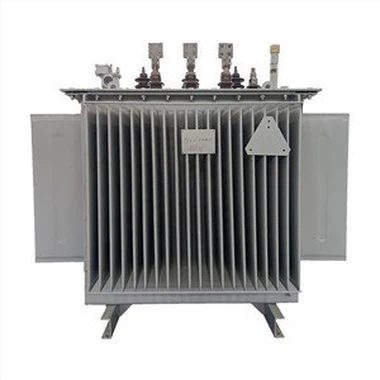
How can the prefabricated cabin achieve automatic temperature regulation function?
Jul 27, 2023
How can the prefabricated cabin achieve automatic temperature regulation function?
In order to meet the internal temperature requirements of the prefabricated cabin, the cabin is equipped with independent modular design heat dissipation and ventilation components. The heat dissipation and ventilation software includes an air duct and a heat collection plate. The upper part of the air duct is equipped with an air outlet, and the heat collection plate is located here. Under sufficient sunlight, the collector plate in the air duct is used to absorb solar energy and heat up the air inside the duct. By utilizing the principle of hot air rising, the temperature inside the prefabricated cabin can be adjusted.
The temperature control system inside the prefabricated cabin detects a temperature signal. When the temperature controller detects the temperature value set in the prefabricated cabin, it will open the electric control air valve and close the electric control air valve at the air outlet and inlet. The internal space of the prefabricated cabin forms a wind circulation flow path with the air duct, and the air inside the prefabricated cabin enters the air duct through the air vent. The air in the air duct enters the prefabricated cabin through the air vent, In this way, the air flowing into the prefabricated cabin can be heated by a heat collecting plate to increase the temperature inside the prefabricated cabin.
When the temperature controller detects that the temperature inside the prefabricated cabin is higher than the set value, it is necessary to introduce external cold air into the prefabricated cabin. The external cold air enters the prefabricated cabin from the auxiliary air outlet, and the air inside the prefabricated cabin is discharged from the ventilation outlet. This causes the air inside the prefabricated cabin to be sucked into the air duct, causing negative pressure to form in the prefabricated cabin. The external cold air then enters the prefabricated cabin from the auxiliary port for heat dissipation and cooling.
In summary, by configuring heat dissipation and ventilation components on the prefabricated cabin, the heat collection plate in the air duct can heat the air in the air duct. Using the principle of hot air upflow, the air flowing out of the air duct will drive the air in the prefabricated cabin to continue flowing into the air duct. Based on the temperature situation in the prefabricated cabin, It can be achieved by using air ducts to heat the air inside the prefabricated cabin, or by using air ducts to create negative pressure inside the prefabricated cabin to allow external cold air to enter the cabin for cooling, reducing the configuration of HVAC equipment, as well as reducing energy consumption costs and equipment maintenance costs in the future. This reduces the installation cost of the prefabricated cabin substation and improves heat dissipation performance, In addition, the phase change heat storage device in the prefabricated cabin can release or absorb heat according to the temperature inside the prefabricated cabin, and further adjust the temperature inside the prefabricated cabin in the absence of light
PRODUCT LINK
http://www.switchgear-china.com/box-type-compact-substation/prefabricated-substation/outdoor-compact-substation.html
PRODUCT PHOTO


This product is usually customized.
We are a manufacturer and have a professional technical department that can design and provide solutions according to customer needs.
Please click on the button below to send us the information, and our sales personnel will contact you to provide you with the design drawings
Here are our customer examples for your reference
Russian clients
| TECHNICAL REQUIREMENTS AND CHARACTERISTICS OF EQUIPMENT | ||||
| Re:82 sets compact substation | ||||
| Item- No. |
Schedule of Technical Data | Unit | Required (at 3000 m |
Offered Data |
| System Data Requirements | ||||
| 1.05.10 | Stranded copper conductor for earthing | |||
| Manufacturer | - | |||
| Material | - | copper | ||
| Cross-section | mm2 | >50 | ||
| Length | m | >40 | ||
| 1.05.11 | Earthing rods | |||
| Manufacturer | - | |||
| Type | - | |||
| Materia! | - | |||
| Length | m | |||
| Sections per rod | pcs | |||
| 1.6 | Compact Substations (Option 1) | |||
| Manufacturer | - | fengyuan | ||
| Type | - | OutDoor | ||
| Overall protection class for complete substation | - | IP 44 | IP 44 | |
| Material of enclosure | - | GI | ||
| Overall dimensions (W x L x H) | ||||
| for S/S with 1x50 kVA transformer | mm/mm/mm | 3000x1850x2150 | ||
| ■ for S/S with 1x100 kVA transformer | mm/mm/mm | 3000x1850x2150 | ||
| for S/S with 1x160 kVA transformer | mm/mm/mm | 3000x1850x2150 | ||
| • for S/S with 1x250 kVA transformer | mm/mm/mm | 3000x1850x2150 | ||
| Overall weight | ||||
| ■ for S/S with 1x50 kVA transformer | kg | 1000kg. | ||
| ■ for S/S with 1x100 kVA transformer | kg | 1000kg. | ||
| ■ for S/S with 1x160 kVA transformer | kg | 1000kg. | ||
| ■ for S/S with 1x250 kVA transformer | kg | 1000kg. | ||
| 1.6.1 | 20 kV Switchgear equipment | |||
| Manufacturer | - | Chnt / Equivalent | ||
| Type | - | Indoor RMU | ||
IF NEED MORE DETAILES,PLEASE FEEL FREE YO CONTACT US