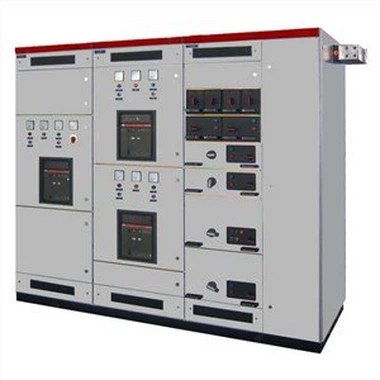
Structure composition of outdoor vacuum circuit breaker
Sep 07, 2021

The outdoor vacuum circuit breaker is composed of a vacuum interrupter, an operating mechanism, a transmission mechanism, and a chassis. The vacuum arc extinguishing consists of static contact, moving contact, shielding cover, shell, bellows, protective tube, conductive rod, end cover plate, etc. The contact of the vacuum interrupter generally adopts the butt type, which is prone to bounce phenomenon. In order to prevent the overvoltage caused by the bounce, there are special requirements for the material of the contact, and it is required that there is sufficient initial pressure and final pressure during the closing process. The bounce time should not exceed 2ms.
The contact material of the vacuum circuit breaker is required to have the characteristics of resistance to welding, arc resistance, low water content, and low current interception level, so as to reliably meet the short-circuit current. Multi-element alloys are generally used to make contacts. The components of the vacuum interrupter are sealed in a glass shell, and the glass shell itself also plays an insulating role. In order to seal the movable conductive rod, a bellows is used, which is an elastic element, through which the vacuum interrupter can complete the opening and closing operations under the action of the operating mechanism without damaging the vacuum.
During the opening operation of the vacuum circuit breaker, due to the high insulation strength of the high vacuum and the rapid diffusion of the charged particles generated by the arc between the contacts in the extremely thin gas, it will not reignite after the arc is extinguished at zero crossing. The metal vapor and charged particles in the arc combustion process are absorbed and condensed by the shielding cover during the intense diffusion. There are three Archimedes spiral grooves on the arcing surface of the contacts, so that the arc current generates a transverse magnetic field between the contacts on the path that the arc current flows through, so that the arc current quickly moves in the tangential direction on the main contact, thereby reducing The temperature of the contact is reduced, and the burning of the contact is reduced.