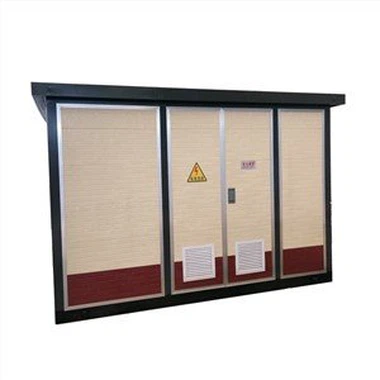
Some of the main technical parameters associated with transformers include
Dec 09, 2021
1. Rated capacity: refers to the rated output capacity of the transformer under rated working conditions (equal to U×I, unit: kVA);
2, rated voltage: no load, rated sub, terminal voltage value (i.e. primary and secondary side voltage value);
3, no-load loss: under no-load conditions, transformer loss (also called iron consumption);
4. No-load current: the current value through the primary coil under no-load condition;
5, short circuit loss: the rated current of the primary side, the loss caused by the secondary short circuit (mainly caused by the coil resistance);
6, tap (tap) concept: in order to meet the needs of power grid operation, the general transformer high voltage side has taps, the voltage value of these taps are expressed by the percentage of rated voltage, the so-called tap voltage.
For example, a 10kV transformer has a ±5% tap, which means that the transformer can operate at three voltage levels: 10.5kV(+5%), 10kV(rated), and 9.5kV(-5%).
Generally speaking, the tap number of on-load voltage regulating transformer (points) more, such as 7 points contact (±3×2.5%) and 9 points contact (±4×2%). Because the synchronous switching of tap switch cannot be guaranteed, the on-load voltage regulating transformer generally cannot run in parallel.
Active load: the load in a power system that generates machine energy or heat energy. But in the load, the pure resistive load only consumes active power, such as electric heating, electric furnace, lighting and other electric load is completely active load.
The load of asynchronous motor and synchronous motor consumes both active power and reactive power, and the part that works to produce machine energy belongs to active load. The active load is supplied by the active power of the generator.
8. Reactive load: the part of an electrical load that does no work. Reactive power is consumed only in inductive loads. Such as: transformer, motor, air conditioning, refrigerator and so on. So when the generator outputs active power, it also needs to provide reactive power.
When reactive power cannot meet the power grid, the voltage of the system will drop. In order to meet the needs of users, reactive compensator should be installed in the substation to maintain the balance of reactive power, so as to maintain the voltage level.
9. Emergency reserve: One of the components of reserve capacity in a power system. Power supply may be affected by temporary or permanent failure of power generation equipment, so the system must set up a certain number of emergency standby power supply to ensure the safety of power facilities.
10. System disassembly: A measure to decompose the complete power system into several independent systems that no longer operate synchronously, in order to prevent system out-of-step and accident expansion. Some local systems may experience power shortage, frequency and voltage drop after disassembling, so part of the load needs to be removed to prevent the stability of the whole system from being damaged.