How to distinguish between American and European box-type substations?
Jan 12, 2021
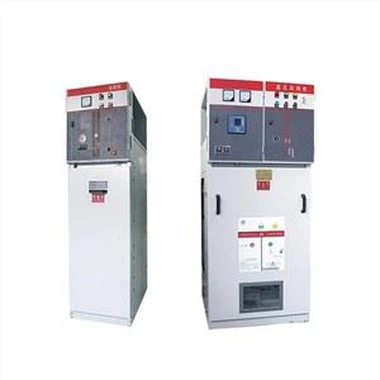
A box-type substation is a facility that integrates high and low voltage primary equipment, transformers, and secondary equipment in a double-layer, sealed, anti-corrosion, and movable outdoor box in the factory. It is a box-type power equipment that combines power transformers and high and low voltage power distribution devices in one or several cabinets and can be hoisted and transported. Because of its compact structure, clean appearance, convenient mobile installation, and low maintenance, it is widely used in the construction of railways, factories, and urban power grids. Common box type substations are divided into two types: European type box type substation and American type box type substation.
In terms of volume: European-style box-type substations have large product volumes due to the internal installation of conventional switch cabinets and transformers. The American box-type substation has a small volume due to the integrated installation.
From protection: The high-voltage side of the European box-type substation is protected by load switches and current-limiting fuses. When one-phase fuse is blown, use the striker of the fuse to open the load switch at the same time to avoid phase loss operation. The high-voltage side of the American box-type substation adopts fuse protection, and the load switch only has the function of switching and cutting off the high-voltage load current, and the capacity is small.
From quality: European-style box-type substation has high cost. On the one hand, the three-phase five-column cores of American box-type substations can be changed to three-phase three-column cores. On the other hand, the high-voltage part of American box-type substations can be modified and moved from the transformer tank to the outside of the tank, occupying space in the high-voltage room.