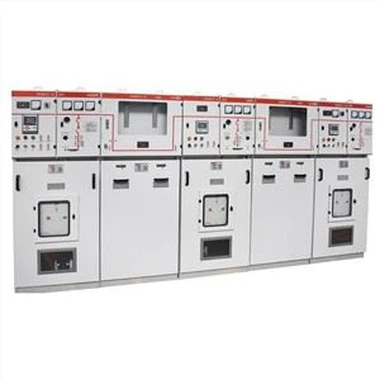
How to check the quality of high and low voltage switchgear
Dec 25, 2020
Inspection of wiring process of high and low voltage switch cabinet:
1. Whether the wires are connected firmly, only one wire is allowed to be connected to each terminal (two wires are allowed if necessary).
2. Insulated wires passing through metal components should be protected from damage.
3. Use wire harness for wiring, the wire harness should be horizontal and vertical, and the horizontal direction is not more than 30mm, the vertical direction is not more than 400mm, there should be a fixed point.
4. When the wires of the AC circuit pass through the metal partition, all phase wires and neutral wires of the circuit should pass through the same hole.
High and low voltage switch cabinet connection process inspection:
(1) The processing quality of the busbars: the surface coating of the busbars (such as nickel plating, paint) should be uniform and free of flow marks. There should be no cracks and wrinkles larger than 1mm at the bends of the busbars. The surface should be free of peeling or hammer marks. , Pits, burrs, etc.
(2) Installation quality of the busbar: the overlap area of the busbar and the specification, quantity, and position distribution of the overlap bolts should comply with the relevant standards. The overlap bolts must be tightened (the tightening torques of bolts and nuts of different specifications are specified) . The distance between bare live conductors of different polarities of the main circuit and the enclosure should not be less than 20 mm (related to the rated working voltage and pollution conditions in the workplace), and the distance between the busbars of the in and out terminals connecting the electrical components of the main circuit should not be less than The spacing between the component terminals.
Other points to check:
1. Whether the model, specification and quantity of the components used meet the requirements of the drawing.
2. Whether the installation and layout of components meet the process requirements.
3. The indicators, buttons, and meters on the panel should be horizontal and vertical.
4. Whether the components have complete signs and nameplates, and whether the contents on the signs are correct.
5. Whether the component installation is reliable, reasonable, and in line with the installation requirements of the component manufacturer.
6. Also check whether the electrical clearance and creepage distance of live parts in electrical components and functional units meet the requirements, and whether the arcing distance of circuit breakers and AC contactors are qualified.
7. The distance between the bare live terminals and other live conductors of electrical components and the metal components shall not be less than 20 mm. If the requirements are not met, insulation measures must be taken. There should be a baffle between the fuse of each phase to prevent the fuse of one phase from being blown to affect the adjacent fuse.
8. It conforms to the product technical agreement when ordering, conforms to national regulations, whether the components are produced by regular manufacturers, and whether the relevant electrical tests are qualified.