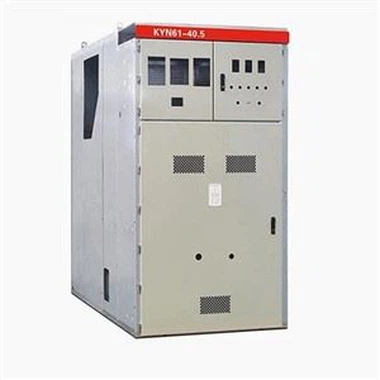
Maintenance requirements for box-type substations
Feb 21, 2021
When the box-type substation is in operation, each district will have an independent low-voltage distribution cabinet. If you want a long service life of the substation, the correct protection method is essential. The following describes how to properly maintain the box-type transformer cabinet.
1. Before the power outage, notify the user in advance, make preparations before the power outage, and equip the corresponding tools to avoid the situation of no tools available during maintenance.
2. Prior to maintenance, the division of labor and maintenance must be clear, implement segmented maintenance, first maintain the security load section; stop the security load, if the load is supplied to the mains as usual, disconnect the air switch for the security load and switch the generator selection switch Put it in the "stop" position, disconnect the positive and negative wires of the battery, and tie the sign to prevent the generator from sending electricity. Check whether there is any deformation at the busbar joints, whether there are blackening traces of discharge, tighten the connecting bolts, if the bolts are rusted, they should be replaced to ensure that the connection is tight, and check whether the insulators on the busbar are loose or damaged. Remove the separate cabinets from the drawers, tighten the terminals, check the installation and wiring of current transformers, ammeters, and watt-hour meters, check the flexibility and reliability of the handle operating mechanism, tighten the air to grow in and out, and clean the switches Dust in the cabinet and at the lead-out behind the power distribution cabinet.
3. After all the equipment is checked and repaired one by one, the devices removed during the maintenance should be installed clearly. After the inspection is completed, the power supply can be kept circulating after confirming that it is correct.
The box body of the box-type substation adopts anti-corrosion design and special painting treatment, which can be applied to various harsh environments, such as stormy and highly polluted areas. The box body passes through eight pretreatment processes before painting, and then seven painting and baking processes are completed.